Your first Thai massage session lasts 60–90 minutes. You remain fully clothed in loose, comfortable garments — no oils, no undressing, no prior experience needed. The masseuse guides your body through acupressure and assisted stretching from feet to head. Most first-timers describe the experience as simultaneously deeply relaxing and physically energising. At Can Thai Massage Ibiza in Sant Miquel, Ibiza, our native Thai masseuses handle everything — your only job is to arrive, let go, and receive.
What is a first Thai massage session actually like?
A first Thai massage session is nothing like the massage experiences most Western visitors expect. There is no massage table, no oil, and no undressing. You lie fully clothed, while a trained masseuse uses their hands, thumbs, elbows, knees, and feet to work along your body’s energy lines — combining deep pressure with guided stretching in a continuous, meditative rhythm that covers the entire body.
The overall sensation is one of progressive release. The masseuse begins gently, reading your body and gauging where you hold tension before gradually deepening the work. By the end of a full session, most first-timers report feeling lighter, taller, and more at ease in their body than they have in months — sometimes years.
The closest analogy is having someone do yoga to you while simultaneously applying deep pressure to every major muscle group. Unlike a Swedish or oil massage, where you simply lie still while the masseuse works on surface tissues, Thai massage is dynamic. Your body is moved, repositioned, and gently challenged — always within your comfort range, always at a pace that allows full relaxation between movements [1].
How should you prepare for your first Thai massage session?
Preparation for a Thai massage session is simple: wear loose, comfortable clothing, avoid a heavy meal in the two hours beforehand, skip alcohol, and arrive five to ten minutes early. No special preparation, equipment, or physical condition is required. The masseuse handles everything else.
What to wear
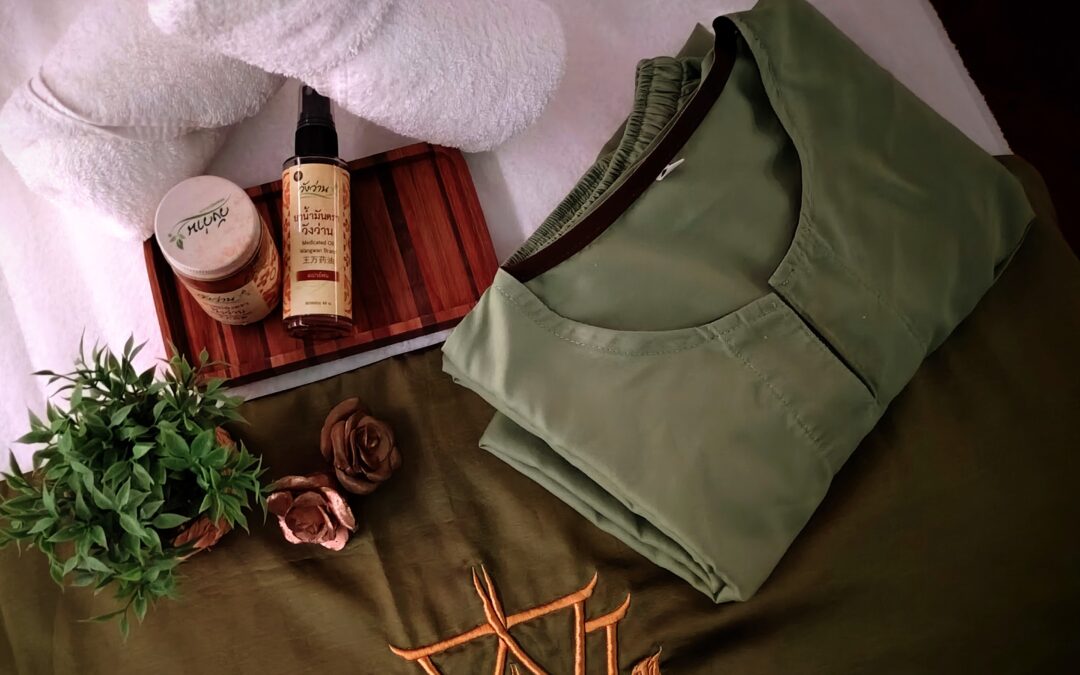
Since you remain fully clothed throughout the session, your clothing choice matters more than in oil-based sessions. Loose-fitting trousers — yoga pants, tracksuit bottoms, or light linen trousers — and a comfortable, untucked top are ideal. Avoid jeans, tight waistbands, or structured clothing that would restrict movement during the stretching sequences. If you arrive in something less practical, we can provide comfortable clothing at Can Thai Massage Ibiza.
What to eat and drink beforehand
A light meal one to two hours before your session is fine. A full stomach is uncomfortable during the abdominal work and hip-flexor stretching that forms part of the session. Avoid alcohol entirely before a session — it impairs the body’s ability to process the circulatory and nervous system effects of the work and can make some positions feel unpleasant.
When to arrive
Arriving five to ten minutes early gives you time to complete a brief intake consultation, use the bathroom, change if needed, and — most importantly — begin to decompress before the session starts. The transition from a busy day to a state of deep receptivity takes a few minutes. The more settled you are at the start, the deeper the session can go.
What to tell your masseuse
Before the session begins, your masseuse will ask a few brief questions: any injuries or areas of sensitivity, parts of the body you want prioritised, and your preferred pressure level. Be direct and honest. If you have chronic lower-back pain, tight hips, or a recent shoulder issue, this information allows the masseuse to adapt the sequence to your specific needs from the very first posture.
What happens during the session, step by step?
A traditional Thai massage session follows a defined sequence that moves from the feet upward through the entire body, ending at the head. The masseuse works both sides of the body symmetrically, alternating between acupressure on the energy lines and passive assisted stretching. The full sequence takes 60–90 minutes depending on the duration you have chosen.
- Arrival and consultation (5 min) — Your masseuse welcomes you, answers any questions, and asks about your physical condition, areas of tension, and pressure preferences. This brief exchange is essential: it shapes the entire session that follows.
- Settling in (2–3 min) — You lie in a supine position (face up). The masseuse may begin with a moment of stillness — hands resting gently on your feet — which signals to your nervous system that the session has begun and invites the body to start letting go.
- Feet and lower legs (10–15 min) — Work begins at the soles of the feet with thumb pressure along the energy lines, followed by systematic compression up the lower legs. This grounds the body and begins to stimulate circulation from the extremities inward.
- Thighs and hips (15–20 min) — The masseuse works up the inner and outer thighs, applying pressure along the sen lines and introducing the first stretching postures: hip rotations, leg lifts, and hip-flexor openers. This is where many people begin to feel the distinctive Thai massage sensation — deep, productive, and unlike anything from a standard table massage.
- Abdomen and lower back (5–10 min) — Gentle palming of the abdomen stimulates digestive circulation. The masseuse then addresses the lower back, either directly in prone position or through supported bridge and spinal twist postures.
- Upper back, shoulders, and arms (15–20 min) — Some of the most impactful work happens here for most first-timers. Arm stretches, shoulder rotations, and deep compression along the upper trapezius and rhomboids release the accumulated tension that builds up from sitting, travelling, and carrying stress in the upper body.
- Neck and head (10 min) — The session closes with detailed work on the neck, scalp, and face. Gentle traction of the cervical spine, pressure along the base of the skull, and a brief facial sequence bring a profound sense of head-to-toe integration and calm.
- Closing and rest (3–5 min) — The masseuse ends the session with a few gentle final movements and then allows you a moment of stillness. Do not rush to get up. This brief integration period — even two or three minutes lying quietly — significantly deepens the lasting effect of the session.
Ready to experience your first authentic Thai massage in Ibiza?
→ Book Your First Session at Can Thai Massage Ibiza
Which session should you choose for your first time?
For a first Thai massage session, 90 minutes is strongly recommended. It allows the masseuse to complete the full body sequence without rushing, giving you the complete experience the practice is known for. A 60-minute session is better suited to returning clients who want to focus on a specific area or have limited time.
| Session Type | Duration | Best For | Coverage | First Time? |
|---|---|---|---|---|
| Traditional Thai Massage | 60 or 90 min | Full-body reset, flexibility, energy flow | Whole body, fully clothed | Ideal — start with 90 min |
| Thai Massage with Oil & Aromasession | 60 or 90 min | Deep relaxation, sensory calm, stress relief | Whole body, massage table, essential oils | Good alternative if you prefer oil |
| Thai Back & Shoulder Massage | 60 min | Targeted upper-body tension, neck pain, headaches | Back, neck, shoulders only | Only if you have a specific concern |
| Thai Facial Massage | 60 or 90 min | Skin vitality, jaw tension, stress held in the face | Face, jaw, neck, scalp | Best as a complement to full session |
| Thai Foot Massage | 60 min | Tired feet, circulation, reflexology | Feet and lower legs only | Good add-on, not a full first experience |
If you are unsure which session is right for you, our team at Can Thai Massage Ibiza is happy to advise before you book.
What will you feel during the session?
During a Thai massage, most first-timers experience a progressive sequence of sensations: initial unfamiliarity as the body adjusts to a new sensory setting, followed by deep release as tension dissolves, and finally a state of profound calm that many describe as unlike anything they have felt before. Some pressure points feel intense briefly — this is normal and productive, not painful.
The first ten minutes
The beginning of a Thai massage session can feel unfamiliar. The fully clothed format, the masseuse’s hands on your feet — it is a different sensory landscape from a standard massage table experience. This settles quickly. Within ten to fifteen minutes, the rhythmic quality of the work and the progressive release of tension in the lower body create a shift in the nervous system that most people describe as dropping into a much deeper state of relaxation than they expected.
When pressure points are worked
Acupressure on trigger points — areas of chronic muscle tension — can produce a brief, intense sensation that is distinctly different from pain. It is closer to the feeling of pressing on a bruise that you did not know you had: immediately recognisable as productive. This sensation typically lasts only a few seconds before dissolving into release. Always communicate with your masseuse if anything feels genuinely uncomfortable rather than productively intense — the distinction matters, and adjustment is immediate [2].
During the stretching sequences
The assisted stretching portions of the session are where most first-timers have their most memorable moments. Being guided into a hip opener or a supported spinal twist that your body could never achieve alone — and feeling it release — is a genuinely novel physical experience. The key is to breathe steadily and allow the movement rather than resisting it. Your masseuse will never force a position beyond what your body is ready for.
By the end
The closing sequences of the session — neck, scalp, and face — are typically the most deeply relaxing. By this point, the nervous system has been progressively downregulated throughout the session, and the final gentle work on the head completes a full-body transition into a state of calm that most clients describe as something between deep relaxation and quiet alertness [1].
How will you feel after your first Thai massage session?
Most first-timers leave feeling simultaneously relaxed and energised — lighter in the body, clearer in the mind. Improved range of motion is often immediately noticeable. Some people experience mild muscle awareness or tiredness for 24–48 hours as the body integrates the work: this is completely normal and temporary, and is followed by a sustained sense of wellbeing that typically lasts several days.
Immediately after
Take your time getting up. Stand slowly, take a few breaths, and notice how your body feels. Most clients report an immediate sense of physical lightness — as if they are standing differently, moving more freely. This is the combination of muscle release, improved circulation, and nervous system calm working together.
In the hours that follow
Drink water during the rest of the day. The increased circulation and lymphatic movement stimulated by the session means the body is processing and eliminating more than usual. Avoid alcohol and intense exercise for the remainder of the day. If possible, allow yourself a quiet evening — the body continues to integrate the work of the session for several hours after you leave [3].
The following day
Some first-timers notice mild muscle awareness — not soreness, but a heightened sensitivity in areas that received deep work. This is a sign that tissues which had been holding chronic tension are now beginning to change. It resolves within 24–48 hours and is followed by a clear improvement in how those areas feel and move.
Over the following days
The most commonly reported after-effects of a Thai massage session — improved sleep, reduced anxiety, greater ease of movement, and a general sense of physical and mental clarity — tend to last for 3–7 days after a single session. With regular practice, these become the new baseline rather than the exception.
What do most first-timers worry about — and should they?
The most common first-timer concerns are about pain, nudity, flexibility requirements, and not knowing what to do. None of these are valid concerns for Thai massage. You remain fully clothed, no flexibility is required, the session should never be painful, and your masseuse guides the entire process. There is nothing you need to do or know in advance.
“Will it hurt?”
Thai massage should never be painful. There is a clear difference between productive intensity — the sensation of deep pressure on a tense muscle releasing — and pain. Your masseuse works within your feedback at all times. If anything feels wrong, saying so will result in an immediate adjustment. Many people are so accustomed to suppressing discomfort that they forget communication is not only allowed but actively welcomed.
“Do I need to be flexible?”
No. Thai massage is specifically designed to improve flexibility in people who do not have it. The masseuse moves your body entirely — you produce no effort whatsoever. People who have never stretched in their lives, who have desk-job bodies, or who are recovering from years of physical inactivity are excellent candidates for Thai massage precisely because the contrast between before and after is so dramatic.
“Will I be undressed?”
No. You remain fully clothed for the entire session. This is a fundamental characteristic of traditional Thai massage and one of the reasons many first-timers find it a more accessible entry point than oil-based hands-on bodywork.
“What if I fall asleep?”
It happens, and it is entirely fine. Falling asleep during a Thai massage is a sign that the nervous system has fully let go — which is exactly what the session is designed to achieve. The masseuse simply continues the session. You will wake feeling refreshed rather than embarrassed.
“What should I do during the session?”
Nothing. Breathe. Receive. The single most effective thing you can do as a first-timer is surrender control and allow the masseuse to do the work. Resist the urge to help with movements or tense up in anticipation of each posture. The more you let go, the more the session can deliver.
What mistakes do first-timers most commonly make?
The most common first-timer mistakes are not communicating pressure preferences, tensing up during stretches, booking too short a session, and rushing out immediately afterwards. Each of these limits the benefit of the session in ways that are entirely avoidable with a little preparation.
- Not speaking up about pressure — Your masseuse is skilled at reading the body, but they cannot feel what you feel. If pressure is too intense or a position uncomfortable, say so immediately. Adjustment is instant and judgment-free.
- Tensing against the stretches — The stretch reflex is automatic, but with conscious awareness you can override it. When you feel a stretch beginning, exhale and consciously release rather than bracing. This single habit dramatically deepens every posture in the session.
- Booking 60 minutes for your first session — A 60-minute session does not allow enough time for a complete full-body sequence. For a first experience of Thai massage in its entirety, 90 minutes is the right choice.
- Eating a large meal beforehand — Deep abdominal work and hip flexor stretching with a full stomach is genuinely uncomfortable. Keep it light in the two hours before your session.
- Rushing out afterwards — The minutes immediately after a Thai massage session are part of the experience. Allow yourself time to reintegrate before walking back into a busy day. Even five minutes of stillness after the session makes a measurable difference to how long the effects last.
- Expecting it to feel like a standard massage — Come with no fixed expectations. Thai massage is a different practice entirely, and first-timers who arrive open to a new experience consistently get far more from the session than those trying to map it onto something familiar.
Your first Thai massage session is waiting for you in Ibiza.
→ Book Your Session at Can Thai Massage Ibiza | Any questions? Contact us
Frequently Asked Questions: Your First Thai Massage Session
What should I wear to my first Thai massage?
Loose, comfortable clothing is ideal — yoga trousers or tracksuit bottoms and a light, untucked top. You remain fully clothed throughout the entire session. Avoid jeans, tight waistbands, or structured clothing that would limit movement during the stretching sequences. If needed, we can provide comfortable clothing at Can Thai Massage Ibiza.
How long should my first Thai massage session be?
For a first session, 90 minutes is strongly recommended. It gives the masseuse enough time to complete the full body sequence — from feet to head — without rushing. A 60-minute session is better suited to returning clients focusing on a specific area or with limited time available.
Do I need any flexibility or yoga experience?
None at all. Thai massage is designed precisely for people with no flexibility. The masseuse moves your body entirely — you produce zero effort. People who are stiff, sedentary, or have never stretched regularly often experience the most dramatic results from their first session.
Will a Thai massage hurt?
Thai massage should never be painful. Some acupressure points and stretching sequences may feel intensely productive — particularly if you carry a lot of tension — but this is different from pain. Your masseuse adjusts immediately to your feedback. Communication throughout the session is always welcome and encouraged.
Will I need to undress?
No. You remain fully clothed for the entire session. This is a fundamental characteristic of traditional Thai massage. It is one of the reasons many first-timers find it an accessible and comfortable introduction to hands-on bodywork.
What happens at the start of a Thai massage session?
Your masseuse begins with a brief consultation to understand your physical condition, any areas of sensitivity, and your pressure preferences. You then lie and the masseuse begins at your feet, working progressively upward through the body over the course of the session.
How will I feel during my first Thai massage?
Most first-timers experience a shift from initial unfamiliarity to deep relaxation within the first fifteen minutes. Pressure points feel briefly intense before dissolving into release. Stretching sequences produce sensations of openness and mobility that are genuinely new for most people. By the end, the predominant sensation is one of deep, integrated calm.
Is it normal to feel sore after a Thai massage?
Some mild muscle awareness in the 24–48 hours after a first session is normal — particularly in areas that received deep work or that you rarely stretch. This is a sign the tissues are changing, not that anything went wrong. It resolves quickly and is followed by a clear improvement in how those areas feel and move.
What should I do after my first Thai massage session?
Drink water, avoid alcohol and intense exercise for the rest of the day, and allow yourself a quiet evening if possible. The body continues to integrate the work of the session for several hours after you leave. Avoid rushing straight back into a demanding schedule — even thirty minutes of calm after your session significantly extends the benefits.
What is the difference between a 60 and a 90 minute Thai massage?
A 60-minute session covers the essential areas but requires the masseuse to work more selectively. A 90-minute session allows for a complete, unhurried full-body sequence with deeper work in each area and more time for the stretching sequences that define the practice. For a first session, the difference in experience is significant.
What if I fall asleep during my Thai massage?
It is entirely fine and quite common — especially for first-timers whose nervous systems have never experienced this depth of relaxation before. The masseuse simply continues the session. Falling asleep is a sign that the body has fully let go, which is exactly what the session is designed to achieve. You will wake feeling refreshed.
How do I book my first Thai massage at Can Thai Massage Ibiza?
You can book directly online at canthaimassageibiza.com/reservations, call us at +34 660 741 610, or send us a message via our contact page. We are open Tuesday to Sunday from 10:00 to 19:15 at Carrer Eivissa, 11, 07815 Sant Miquel, Ibiza. We recommend booking in advance, especially during the summer season.
Sources
- Gold, R. (2007). Thai Massage: A Traditional Technique. Elsevier Mosby. ISBN 978-0-323-04500-9.
- Moyer, C.A., Rounds, J. & Hannum, J.W. (2004). A Meta-Analysis of Massage Research. Psychological Bulletin, 130(1), 3–18. doi.org/10.1037/0033-2909.130.1.3
- Field, T. (2016). Massage Research Review. Complementary Therapies in Clinical Practice, 24, 19–31. doi.org/10.1016/j.ctcp.2016.04.005
About Can Thai Massage Ibiza
This guide was written by the team at Can Thai Massage Ibiza, a family-run Thai massage centre of Thai origin in Sant Miquel, Ibiza. All our masseuses are native Thai, certified by Thailand’s most prestigious massage schools, and have guided hundreds of first-timers through their first experience of authentic Thai massage. With over 81 verified Google reviews, we know precisely what questions first-time clients have — and exactly how to put them at ease.
How this article was produced: Based on the direct hands-on and client experience of our certified masseuses, peer-reviewed massage research, and traditional Thai massage methodology. Last reviewed: February 2026.