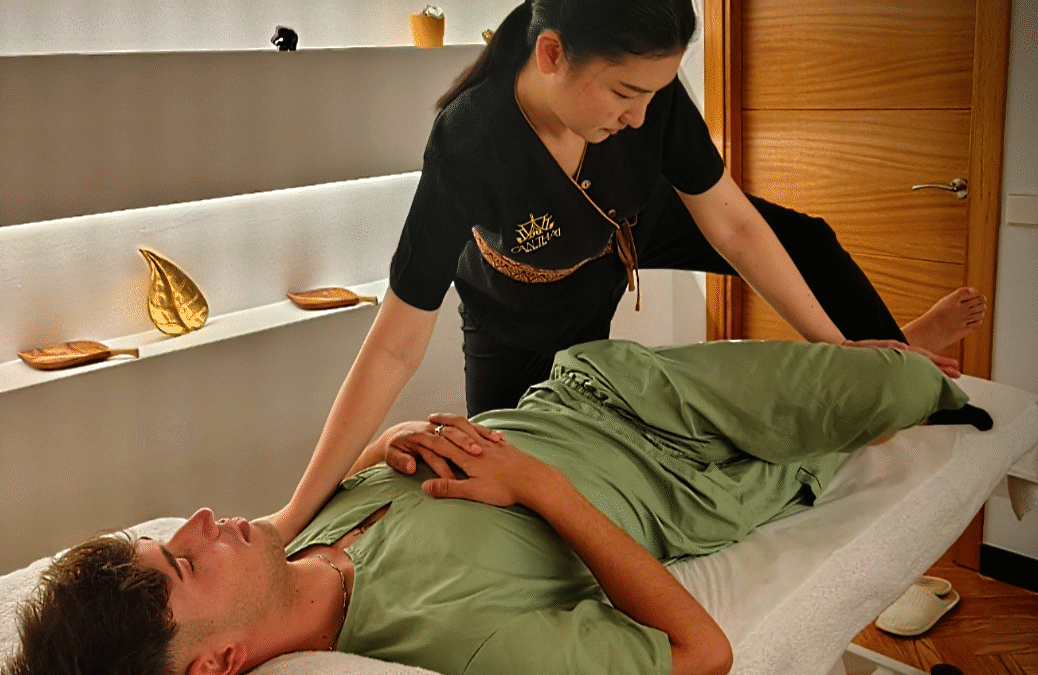
Traditional Thai massage combines acupressure, rhythmic compression and assisted stretching to create a distinctive bodywork experience. It is traditionally performed without massage oils, with the recipient wearing comfortable clothing.
Many people choose this practice to support relaxation, improve their sense of mobility and ease everyday muscular tension. Its combination of pressure techniques and guided movements makes it different from many conventional massage styles.
In this guide, we explore eight potential benefits of Thai massage, how its techniques work and what to consider before your first session.
8 Potential Benefits of Thai Massage
The experience and effects of massage vary between individuals. The following are commonly reported benefits and areas where research has explored the potential effects of Thai massage and other massage practices.
1. Flexibility and Range of Motion
One of the distinctive features of traditional Thai massage is assisted stretching. The practitioner guides the recipient through controlled movements and comfortable positions, working with different areas of the body.
These techniques may help improve short-term flexibility and comfortable range of motion. The movements should be adapted to each person’s mobility and should never be forced.
2. Muscle Relaxation and Relief from Everyday Tension
Thai massage combines pressure, rhythmic compression and stretching to work on areas of muscular tightness.
Many people choose this type of bodywork to relax the back, shoulders, legs and other areas that can feel tense after prolonged sitting, physical activity or everyday routines.
Some clinical research has investigated traditional Thai massage for specific types of musculoskeletal discomfort, including non-specific lower-back pain. However, results from individual studies should not be interpreted as a guarantee of pain relief for everyone.
3. A Sense of Improved Circulation
The rhythmic movements and pressure techniques used during Thai massage create repeated contact with different areas of the body.
Massage may temporarily influence local blood flow and produce a feeling of warmth and relaxation. However, it should not be presented as a treatment for circulatory disorders, lymphatic conditions or swelling.
4. Relaxation and Stress Management
Taking time away from daily responsibilities in a calm environment can encourage relaxation. The attentive rhythm of a massage session may help people feel less tense and more comfortable.
Research into massage has explored its potential relationship with perceived stress and anxiety. Individual responses vary, and massage should complement rather than replace professional support when someone is experiencing persistent anxiety or stress-related difficulties.
5. Rest and Sleep Quality
Some people report feeling more relaxed and sleeping comfortably after a massage session.
Reducing everyday physical tension and taking time to unwind may contribute to a more restful experience. However, Thai massage is not a treatment for insomnia or other sleep disorders, and improvements in sleep cannot be guaranteed.
6. Neck and Shoulder Comfort
The neck and shoulders are common areas of everyday muscular tension, particularly among people who spend long periods working at computers or travelling.
Depending on the individual’s needs, a practitioner may use adapted pressure and gentle movements around these areas to encourage relaxation and comfortable movement.
Pressure should always be adjusted to the recipient’s comfort. Neck techniques should be gentle and appropriate, particularly when there is existing discomfort or a medical condition.
7. Body Awareness and a Feeling of Renewed Energy
Traditional Thai massage combines different movements and pressure techniques, encouraging the recipient to pay attention to physical sensations and movement.
Some people describe feeling lighter, more relaxed or refreshed after a session. These experiences are subjective and may differ depending on the person, the treatment and their general wellbeing.
Traditional Thai massage also incorporates the concept of Sen energy pathways. These belong to the traditional Thai understanding of bodywork and should be distinguished from medically established anatomical structures.
8. Posture Awareness and Everyday Movement
Assisted stretching and attention to different areas of the body may encourage greater awareness of posture and movement.
Some people find that a massage session helps them notice areas of stiffness or restricted movement. However, massage alone should not be considered a treatment for postural disorders or a guaranteed way to correct structural problems.
How Do Thai Massage Techniques Support Wellbeing?
Traditional Thai massage uses several techniques that work together during a session. Rather than relying mainly on long, gliding strokes, the practitioner combines pressure and assisted movement.
- Acupressure: controlled pressure applied using the thumbs, palms and other parts of the hands.
- Rhythmic compression: repeated movements applied to selected areas of the body.
- Assisted stretching: guided movements adapted to the recipient’s comfortable range of motion.
- Body positioning: different positions that allow the practitioner to work on various areas.
The techniques, intensity and sequence can vary depending on the practitioner and the recipient’s preferences.
If you would like to understand the cultural origins and traditional principles behind this practice, read our guide to Nuad Thai and traditional Thai massage.
What Should You Know Before Your First Thai Massage?
Traditional Thai massage has some distinctive characteristics that are useful to understand before booking your first session.
- You normally remain fully clothed. Loose, comfortable clothing allows you to move more easily during assisted stretches.
- Traditional Nuad Thai does not normally use oils. Oil-based Thai massage is a different treatment approach.
- No previous yoga experience is required. The practitioner should adapt movements to your mobility and comfort.
- Communication is important. Always mention if pressure feels too strong or a movement causes discomfort.
- Session duration varies. Choose a treatment duration that suits your preferences and the available options.
When Should You Take Precautions?
Thai massage includes pressure and assisted movements, so it may not be appropriate in every circumstance.
Speak with a healthcare professional before receiving massage if you are pregnant, recovering from surgery, have a recent injury or fracture, severe osteoporosis, a bleeding disorder, a history of blood clots or another condition that may be affected by pressure or stretching.
Always tell your practitioner about relevant medical conditions, injuries, physical limitations or areas of discomfort before the treatment.
Remember: a comfortable massage session should always respect your physical limits. You can ask for lighter pressure or request that a movement be stopped at any time.
How to Prepare for a Thai Massage Session
A few simple considerations can help you feel more comfortable before and after your treatment.
- Allow enough time to arrive. Avoid rushing immediately before your appointment.
- Wear comfortable clothing. Loose garments make assisted movements easier.
- Avoid a heavy meal immediately beforehand. Choose a timing that allows you to feel comfortable during the session.
- Avoid alcohol before your treatment. Massage is best experienced when you are comfortable and fully alert.
- Communicate your preferences. Tell the practitioner about your preferred pressure and any areas that need particular attention.
- Take your time afterwards. Allow yourself a few moments to relax before returning to your normal activities.
Why Does the Practitioner’s Experience Matter?
Traditional Thai massage is a hands-on practice that requires knowledge of different techniques and the ability to adapt movements to each recipient.
The quality and comfort of the experience can depend on several factors:
- Training and practical experience: familiarity with traditional techniques and appropriate application.
- Individual adaptation: adjusting pressure and movements to the recipient’s comfort and mobility.
- Communication: understanding preferences and responding to feedback throughout the session.
- Professional environment: a clean, welcoming and calm setting.
Can Thai Massage Ibiza is a Thai massage studio located in Sant Miquel, in the north of Ibiza. We offer a selection of treatments and aim to provide a welcoming environment where each client’s preferences and comfort are important.
You can learn more about our studio and approach on our About Us page.
How Often Should You Have a Thai Massage?
There is no universal schedule for receiving Thai massage. Frequency depends on personal preferences, lifestyle, comfort and individual circumstances.
Some people enjoy an occasional session as part of their general relaxation routine, while others prefer more regular appointments.
If you are considering massage to address a particular physical concern, consult an appropriate healthcare professional about what may be suitable for your situation.
Discover Thai Massage at Can Thai Massage Ibiza
Whether you are curious about traditional Thai techniques or simply looking for time to relax, choosing a treatment that matches your preferences is an important first step.
At Can Thai Massage Ibiza, our studio in Sant Miquel welcomes residents and visitors looking to discover different massage treatments in a calm setting.
Explore the available treatments and appointment options to find the experience that suits you.
Discover traditional Thai massage in Sant Miquel, Ibiza.
Explore Reservations at Can Thai Massage IbizaIf you have questions before choosing a treatment, you can also contact our team.
Frequently Asked Questions About Thai Massage Benefits
What Are the Main Benefits of Thai Massage?
People commonly choose Thai massage for relaxation, assisted stretching, mobility and relief from everyday muscular tension. Individual experiences and results vary.
Can Thai Massage Improve Flexibility?
Traditional Thai massage incorporates assisted stretching and guided movements. These techniques may help improve short-term flexibility and comfortable range of motion.
Does Thai Massage Help with Muscle Tension?
Pressure and rhythmic compression may help people feel more relaxed in areas of everyday muscular tightness. Persistent or severe pain should be assessed by a healthcare professional.
Is Thai Massage Good for Stress?
Many people find massage relaxing. Research has explored the relationship between massage and perceived stress, although individual responses vary.
Can Thai Massage Help with Sleep?
Some people report feeling more relaxed after a session, which may help them unwind before rest. However, massage is not a treatment for sleep disorders.
Is Thai Massage Suitable for People Who Exercise?
Active people may enjoy assisted stretching and massage as part of their general wellbeing routine. Pressure and movements should be adapted to their physical condition and recovery needs.
Do I Need to Be Flexible to Receive Thai Massage?
No. Previous yoga experience or a particular level of flexibility is not required. The practitioner should adapt movements to your comfortable range of motion.
Is Traditional Thai Massage Performed with Oils?
Traditional Nuad Thai is generally performed without oils and with the recipient wearing comfortable clothing. Thai oil massage is a different treatment style.
How Long Does a Thai Massage Session Last?
Session duration depends on the treatment selected. Check the reservations page for current treatment options and durations at Can Thai Massage Ibiza.
Where Can I Experience Thai Massage in Ibiza?
Can Thai Massage Ibiza is located in Sant Miquel, in the north of Ibiza. Visit our reservations page to explore appointment options.
Scientific Research and Further Reading
The following publications were included in the original article as further reading on massage and traditional Thai massage. Interpret their findings in the context of their specific study populations, methods and limitations.
- Buttagat, V. et al. (2016). Effects of Thai Traditional Massage on Chronic Nonspecific Low Back Pain. Journal of Bodywork and Movement Therapies. Read the publication.
- Field, T. (2016). Massage Research Review. Complementary Therapies in Clinical Practice, 24, 19–31. Read the publication.
- Chatchawan, U. et al. (2014). Effects of Thai Traditional Massage on Physical Fitness in Football Players. Medical Science Monitor, 20, 1830–1836. Read the publication.
- Moyer, C.A., Rounds, J. & Hannum, J.W. (2004). A Meta-Analysis of Massage Research. Psychological Bulletin, 130(1), 3–18. Read the publication.